
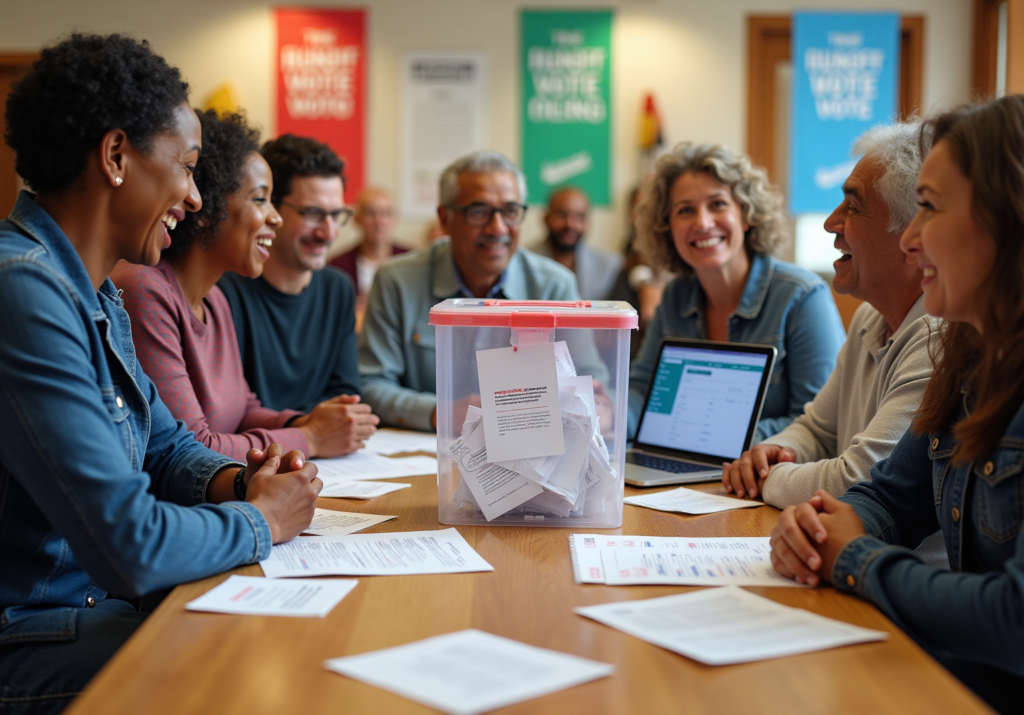
Key Highlights
- Runoff voting is crucial when no candidate achieves a majority in the first round, ensuring that elected representatives reflect the majority’s preferences.
- In labour votes, runoff voting allows top candidates to compete again, enhancing democratic legitimacy and member trust.
- Votem’s online voting system improves accessibility and security for runoff elections, although voter turnout often declines between rounds.
- Traditional two-round runoff systems face a 67% decrease in turnout, while Instant Runoff Voting (IRV) can increase participation by allowing ranked preferences.
- Studies show that secondary votes can lead to a turnout decrease of up to 63%, highlighting the need for strategies to improve engagement.
- Best practises for conducting runoff elections include clear communication, utilising technology, voter education, and monitoring post-election processes.
Introduction
Runoff voting is crucial for ensuring that union elections truly reflect the members’ will, especially when initial votes do not achieve a majority. This method not only bolsters democratic legitimacy but also cultivates trust within the organization, making it vital for effective representation in labor relations. However, as voter turnout often declines in subsequent rounds, how can union leaders effectively engage their members and ensure robust participation?
Exploring the intricacies of runoff voting and its best practices provides valuable insights for unions aiming to navigate these challenges and enhance their electoral processes. By understanding the dynamics at play, union leadership can implement strategies that not only encourage participation but also strengthen the democratic foundation of their elections.
Define Runoff Voting and Its Importance in Union Elections
is essential in elections where no candidate secures the required majority in the first round. This process is particularly vital in collective votes, where the outcomes can significantly impact leadership selections. By facilitating a , ensures that the representatives chosen genuinely reflect the majority’s preferences, thereby enhancing the legitimacy of in organizational governance.
Consider a scenario where a labor vote fails to yield a candidate with over 50% of the votes. In such cases, allows the top contenders to compete again, ensuring that the eventual winner enjoys broad support from the electorate. This method not only upholds democratic principles but also fosters trust among members – an essential element for effective representation and engagement in .
Recent trends indicate that the practice of is increasingly recognized as a in union governance. Votem’s adaptable enhances accessibility and security, which are crucial for maximizing participant engagement in these secondary contests. However, it’s important to note that often declines between the first and second rounds of , which presents challenges for participation.
As Rev. Theodore Hesburgh aptly stated, “Voting is a civic sacrament,” underscoring the in shaping leadership. Additionally, legal challenges have emerged regarding the in racially divided contexts. This necessitates a careful evaluation of their implementation.
By understanding these dynamics and leveraging Votem’s innovative solutions, union leadership can , ensuring that it .
Examine Key Mechanisms of Runoff Voting
can be conducted through various mechanisms, each presenting distinct advantages and challenges. In the traditional two-round system, is necessary between the top candidates if no one achieves a majority in the first round. This method often leads to ; in fact, participation decreases in 67% of state and federal .
Conversely, allows participants to rank candidates by their order of preference. If no candidate secures a majority of first-choice votes, the candidate with the least votes is eliminated, and their votes are reallocated based on the preferences of those voters. This approach not only minimizes the need for a separate but also enhances participant engagement by allowing a more nuanced expression of preferences. Jurisdictions that have adopted IRV have seen , with some areas reporting a remarkable 10-point rise in participation.
Votem’s adaptable online supports these various , ensuring that processes remain accessible, secure, and transparent. Understanding these mechanisms empowers union leaders to select the most effective approach for their elections, thereby and potentially .
Are you ready to explore how these voting methods can transform your union’s electoral processes?
Analyze the Impact of Runoff Voting on Voter Turnout
Studies indicate that secondary votes can significantly influence , often leading to reduced participation rates compared to initial polls. For instance, research shows that participation in second-round votes can decrease by as much as 63%. This alarming statistic underscores the need for to counteract this trend.
One promising solution is the adoption of , which can enhance the of the . By implementing IRV, union leaders can foster a more inclusive environment that encourages participation. In collective votes, where member involvement is crucial, understanding these dynamics allows leaders to apply targeted strategies that promote increased turnout.
Promoting the is essential. Ensuring a can effectively mobilize voters. Furthermore, utilizing , such as Votem, empowers members to cast their votes conveniently from any location, thereby enhancing overall participation.
In conclusion, by embracing and leveraging technology, union leadership can significantly improve and engagement. The time to act is now-let’s ensure every voice is heard.
Implement Best Practices for Conducting Runoff Elections
To carry out successful supplementary votes, labor leaders must adhere to several :
- Clear Communication: Informing members about the runoff process is essential. Detail the reasons for the vote and the methods of conducting it. Transparency fosters trust and encourages participation. Notably, there was a after were implemented, streamlining the process and reducing the time from petition to election.
- Utilize Technology: Implement , such as Votem’s CastIron. This facilitates easy access for members while ensuring compliance with legal standards. Such an approach not only enhances but also aligns with the of today’s electorate, potentially increasing turnout by up to three times on launch day.
- : Providing is crucial. Clarify how votes are counted and emphasize the importance of each member’s participation. Engaging members through educational initiatives can significantly impact turnout and overall satisfaction.
- Monitor and Evaluate: After the vote, assess turnout and the overall process to identify areas for improvement in future votes. Ongoing assessment helps organizations adjust and enhance their strategies, ensuring they remain attentive to member needs and preferences.
By following these , unions can ensure that runoff voting is conducted in a fair and effective manner. This ultimately leads to stronger representation and enhanced member satisfaction.
Conclusion
Runoff voting is a vital mechanism in union elections, ensuring that leadership choices truly reflect the majority’s will. By facilitating a secondary vote among leading candidates, this process not only enhances democratic legitimacy but also fosters trust within the membership. The significance of runoff voting cannot be overstated; it empowers unions to select representatives who genuinely embody the collective preferences of their members.
This article explores various facets of runoff voting, shedding light on its mechanisms, its impact on voter turnout, and best practices for implementation. It examines the traditional two-round system alongside the innovative Instant Runoff Voting (IRV), illustrating how these methods can significantly boost engagement and participation. Furthermore, the importance of clear communication, leveraging technology, and prioritizing voter education emerges as essential strategies to combat declining turnout rates, which often plummet between rounds.
The call to action is unmistakable: unions must wholeheartedly embrace runoff voting and its associated best practices to ensure every voice is heard and represented. By harnessing technology and prioritizing member engagement, union leaders can adeptly navigate the complexities of runoff elections, leading to stronger representation and a more vibrant democratic process within their organizations.
Frequently Asked Questions
What is runoff voting?
Runoff voting is a voting process used in elections where no candidate secures the required majority in the first round. It facilitates a secondary vote among the leading candidates to ensure that the eventual winner reflects the majority’s preferences.
Why is runoff voting important in union elections?
Runoff voting is important in union elections because it helps ensure that representatives chosen truly reflect the majority’s preferences, thereby enhancing the legitimacy of the election outcomes and fostering trust among members.
How does runoff voting work in practice?
If a labor vote does not yield a candidate with over 50% of the votes, runoff voting allows the top contenders to compete again in a second round, ensuring that the winner has broad support from the electorate.
What are the benefits of using runoff voting?
The benefits of runoff voting include upholding democratic principles, fostering trust among members, and achieving fair and transparent outcomes in union governance.
What challenges are associated with runoff voting?
One challenge associated with runoff voting is that voter turnout often declines between the first and second rounds, which can impact participation and the overall legitimacy of the election results.
How does Votem enhance the runoff voting process?
Votem’s adaptable online voting system enhances accessibility and security, which are crucial for maximizing participant engagement in secondary contests during runoff voting.
What concerns exist regarding runoff voting in racially divided contexts?
Legal challenges have emerged regarding the potential for runoff voting processes to inadvertently discriminate against numerical minorities in racially divided contexts, necessitating careful evaluation of their implementation.
What quote emphasizes the significance of voting?
Rev. Theodore Hesburgh stated, “Voting is a civic sacrament,” highlighting the importance of every vote in shaping leadership.
List of Sources
- Define Runoff Voting and Its Importance in Union Elections
- An Explainer: Runoff Elections (https://rockthevote.org/explainers/runoff-elections-an-explainer)
- Jesuit Resource – Election Day Quotes (https://xavier.edu/jesuitresource/online-resources/quote-archive1/election-dayvoting)
- These Inspiring Quotes Will Get You Excited to Vote (https://countryliving.com/life/g24446791/voting-quotes)
- Impact of U.S. Runoff Elections on Racial Minorities and Women: An Analysis and Comparison with Instant Runoff Voting – FairVote (https://fairvote.org/archives/impact-of-runoffs-on-racial-minorities-and-women-2000)
- Examine Key Mechanisms of Runoff Voting
- How do runoff elections work? | USAFacts (https://usafacts.org/articles/how-do-runoff-elections-work)
- Impact of U.S. Runoff Elections on Racial Minorities and Women: An Analysis and Comparison with Instant Runoff Voting – FairVote (https://fairvote.org/archives/impact-of-runoffs-on-racial-minorities-and-women-2000)
- Research and data on RCV in practice – FairVote (https://fairvote.org/resources/data-on-rcv)
- An Explainer: Runoff Elections (https://rockthevote.org/explainers/runoff-elections-an-explainer)
- Analyze the Impact of Runoff Voting on Voter Turnout
- starvoting.org (https://starvoting.org/case_studies)
- Implement Best Practices for Conducting Runoff Elections
- These Inspiring Quotes Will Get You Excited to Vote (https://countryliving.com/life/g24446791/voting-quotes)
- New union election rules yield much quicker elections – McAfee & Taft (https://mcafeetaft.com/new-union-election-rules-yield-much-quicker-elections)