
Key Highlights
- Prioritise robust security protocols in voting apps, including end-to-end encryption and multi-factor authentication.
- Compliance with regulations like NCUA, DOL, and ERISA is vital for maintaining trust in elections.
- Votem’s CastIron system uses AES-256 encryption to secure participant data during transfer and storage.
- User-friendly features, such as an intuitive interface and responsive support, are crucial for enhancing voter engagement.
- Mobile-first design can significantly boost participation rates, evidenced by CastIron’s management of over 13 million votes.
- Accessibility standards like WCAG 2.1 AA ensure inclusivity for all participants, including individuals with disabilities.
- Real-time feedback and advanced analytics tools help organisations track participation and refine outreach strategies.
- Mobile accessibility, such as SMS balloting, can increase voter turnout by three to five percentage points.
- Successful implementations of mobile voting, like in West Virginia, demonstrate the effectiveness of these strategies.
Introduction
Selecting the right app for voting is more critical than ever as technology reshapes the electoral landscape. The surge in demand for secure, user-friendly, and accessible voting solutions highlights the need for organizations to understand best practices in choosing an effective application. This understanding can significantly enhance voter engagement and trust in the democratic process. However, amidst the myriad of options available, how can organizations ensure they are making the best choice to safeguard both security and accessibility?
Furthermore, the implications of this choice extend beyond mere functionality; they touch on the very foundation of democratic participation. By prioritizing security and accessibility, organizations not only protect the integrity of the electoral process but also foster a more inclusive environment for all voters. In addition, embracing these principles can lead to increased voter turnout and confidence in the electoral system.
In conclusion, as union leadership navigates this complex landscape, it is essential to approach the selection of voting applications with a strategic mindset. By asking the right questions and considering the needs of all stakeholders, organizations can make informed decisions that uphold the values of democracy.
Choose a Secure and Compliant Voting App
When selecting an app for voting, it’s crucial to prioritize systems that implement . Strong measures like end-to-end encryption, multi-factor authentication, and regular security assessments are non-negotiable. Compliance with regulations such as the National Credit Union Administration (NCUA), Department of Labor (DOL), and Employee Retirement Income Security Act (ERISA) is vital for upholding trust and integrity in the electoral process.
For example, Votem’s CastIron system employs AES-256 encryption for each ballot, ensuring that participant data remains private and secure during both transfer and storage. Regular security evaluations are essential for identifying vulnerabilities and enhancing defenses against potential threats. This proactive approach fosters a secure electoral environment.
As the demand for secure online electoral systems rises, services that prioritize these security measures will be better positioned to instill confidence among participants and ensure compliance with evolving regulations. Are you ready to take the necessary steps to safeguard your electoral process?
Prioritize User-Friendly Features for Engagement
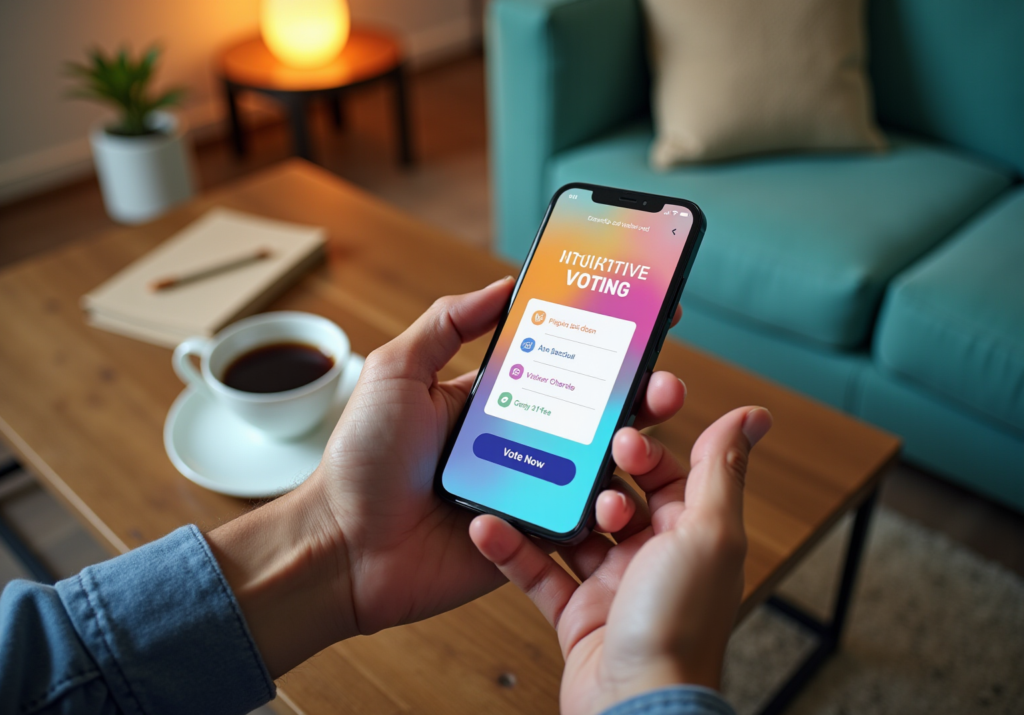
An effective app for voting is essential for modern electoral processes, as it features an intuitive interface that streamlines the voting experience. Clear instructions, customizable ballots, and responsive support are crucial elements that significantly enhance user experience. Did you know that a mobile-first design can boost participation by up to three times on launch day? This trend is evident in CastIron’s platform, which has successfully .
Furthermore, the organization’s mission to broaden access and strengthen confidence in elections is clear. Their dedication to accessibility standards, such as WCAG 2.1 AA, ensures that all participants – including individuals with disabilities and military personnel facing challenges – can fully engage in the electoral process. This commitment not only fosters inclusivity but also reinforces trust in the democratic system.
In addition, as union leaders, it’s vital to recognize the importance of these features in driving voter engagement with the app for voting. By prioritizing user-friendly designs and accessibility, we can empower every voice in the electoral process.
Utilize Real-Time Feedback and Analytics
Incorporating real-time feedback systems into the app for voting is essential for organizations that aim to effectively evaluate participant sentiment and involvement. These not only track participation rates but also uncover trends and deliver actionable insights. For example, Votem’s platform features a real-time quorum meter, which eliminates the need for last-minute reminder calls and streamlines the decision-making process.
Furthermore, by leveraging this data, organizations can refine their outreach strategies, ultimately boosting participation in future elections. The role of analytics in online participation engagement is paramount; it empowers organizations to make informed decisions that resonate with their members.
In addition, consider how these insights can transform your approach to member engagement. Are you ready to harness the power of real-time feedback to enhance your electoral processes? The time to act is now.
Implement Mobile Accessibility to Boost Turnout
To boost participation, implementing mobile accessibility in the election app is crucial. The patented CastIron platform exemplifies a mobile-first approach, enabling individuals to use an app for voting to cast their ballots from anywhere-whether at home, in the office, or on the go. Research shows that mobile balloting can increase turnout by three to five percentage points. For instance, West Virginia’s implementation of mobile balloting in the 2018 federal election resulted in similar increases in participation.
Furthermore, features like SMS balloting and mobile-friendly interfaces, as provided by Votem, significantly enhance accessibility for all voters. As Professor Konstantin Sonin observes, “Understanding the implications of mobile balloting is crucial for increasing engagement.” By ensuring that the voting process is convenient and straightforward, organizations can foster greater participation and engagement.
In addition, testimonials from satisfied clients, such as the New Mexico State Republican Party, highlight the effectiveness of Votem’s services. With the upcoming on April 1, 2026, organizations have an opportunity to explore strategies that can further enhance voter engagement. Are you ready to take action and ensure that every voice is heard?
Conclusion
Selecting an effective app for voting is not just a choice; it’s a critical step in ensuring a secure and engaging electoral process. By prioritizing security, user-friendliness, and real-time analytics, organizations can significantly enhance the voting experience and foster trust among participants.
Security protocols, such as end-to-end encryption and compliance with relevant regulations, are paramount. Coupled with user-friendly features that cater to diverse populations, these elements create a robust framework for voter engagement. Furthermore, leveraging real-time feedback and analytics provides valuable insights into voter behavior and preferences, ultimately driving higher turnout and more informed decision-making.
In a landscape where technology plays an increasingly vital role in democracy, organizations must adopt these best practices for voting apps. By taking proactive steps to enhance security, accessibility, and engagement, every voice can be empowered. The electoral process must remain robust and representative. The time to act is now-embrace these strategies and contribute to a more inclusive and trustworthy democratic system.
Frequently Asked Questions
Why is it important to choose a secure voting app?
Choosing a secure voting app is crucial to ensure robust security protocols, uphold trust and integrity in the electoral process, and comply with relevant regulations.
What security measures should a voting app implement?
A voting app should implement strong security measures such as end-to-end encryption, multi-factor authentication, and regular security assessments.
Which regulations should a voting app comply with?
A voting app should comply with regulations such as the National Credit Union Administration (NCUA), Department of Labor (DOL), and Employee Retirement Income Security Act (ERISA).
How does Votem’s CastIron system ensure ballot security?
Votem’s CastIron system employs AES-256 encryption for each ballot, ensuring that participant data remains private and secure during both transfer and storage.
Why are regular security evaluations important for voting apps?
Regular security evaluations are essential for identifying vulnerabilities and enhancing defenses against potential threats, fostering a secure electoral environment.
What is the impact of prioritizing security measures in voting apps?
Prioritizing security measures in voting apps instills confidence among participants and ensures compliance with evolving regulations, which is increasingly important as the demand for secure online electoral systems rises.
List of Sources
- Choose a Secure and Compliant Voting App
- 10 Free Online Voting Systems to Boost Union Engagement | Online Voting with Votem® (https://votem.com/10-free-online-voting-systems-to-boost-union-engagement)
- Guide to online voting security: technologies and standards (https://eligovoting.com/guide-to-online-voting-security-technologies)
- Election officials say trust with CISA is broken — maybe permanently (https://votebeat.org/2026/01/15/cisa-election-security-trust-broken-trump-chris-krebs-denise-merrill)
- How State Legislators Can Protect Election Integrity and Security (https://brennancenter.org/our-work/research-reports/how-state-legislators-can-protect-election-integrity-and-security)
- Security Recommendations (https://nist.gov/itl/voting/security-recommendations)
- Prioritize User-Friendly Features for Engagement
- West Virginia was the first state to use mobile voting. Should others follow? (https://news.uchicago.edu/story/voting-mobile-devices-increases-election-turnout)
- 15 Inspirational Quotes to Get You Excited About Voting (https://globalcitizen.org/en/content/voting-quotes-inspirational)
- Voting by smartphone? New York entrepreneur bets millions on future of U.S. elections (https://cbsnews.com/newyork/news/voting-app-smartphone-ballots-future-elections)
- 10 Essential Features of an Online Voting App for Unions | Online Voting with Votem® (https://votem.com/10-essential-features-of-an-online-voting-app-for-unions)
- Utilize Real-Time Feedback and Analytics
- 10 Essential Features of an Online Voting App for Unions | Online Voting with Votem® (https://votem.com/10-essential-features-of-an-online-voting-app-for-unions)
- How election votes and data for 2026 are collected at NBC news (https://nbcnews.com/politics/2026-elections/how-election-data-is-collected)
- Case Study: Voting App (https://medium.com/vignesh-balaji-velu/case-study-voting-app-92f4878e3dd1)
- Election Analytics (https://surveyandballotsystems.com/advanced-analytics)
- Implement Mobile Accessibility to Boost Turnout
- West Virginia was the first state to use mobile voting. Should others follow? (https://news.uchicago.edu/story/voting-mobile-devices-increases-election-turnout)
- Casting Votes on a Mobile Device Increases Voter Turnout, Harris Public Policy Study Shows (https://harris.uchicago.edu/news-events/news/casting-votes-mobile-device-increases-voter-turnout-harris-public-policy-study)