
Key Highlights
- Creating effective polls in Microsoft Teams enhances engagement and gathers insights during meetings.
- Define clear questions with at least two answer options; consider enabling multiple selections for diverse opinions.
- Utilise anonymous responses to encourage honest feedback and foster open dialogue.
- Strategically launch polls after discussing relevant topics to capture immediate participant reflections.
- Emphasise the significance of member input to boost participation rates in decision-making.
- Analyse poll results using analytics tools to identify trends and user preferences for future discussions.
- Aim for a response rate of 50% or higher to ensure feedback is representative and actionable.
- Ensure compliance with voting regulations, including secret ballot mandates and record retention as per LMRDA.
- Prioritise accessibility in polls to include all members, particularly those with disabilities, adhering to WCAG 2.1 AA standards.
- Maintain accurate records of poll results to reinforce transparency and uphold the integrity of elections.
Introduction
Creating an engaging and effective voting process within teams is more crucial than ever. As organizations strive for greater inclusivity and participation, the need for a robust system becomes evident. This article explores best practices for utilizing Microsoft Teams to enhance voting experiences, ensuring that every union member’s voice is heard and valued.
However, what challenges do leaders face in fostering genuine engagement during these polls? How can they navigate the complexities of compliance and accessibility? Addressing these questions empowers teams to gather insights and strengthen their collective decision-making processes. Furthermore, by implementing effective strategies, union leadership can transform the voting experience into a powerful tool for collaboration and unity.
Create Effective Polls in Microsoft Teams
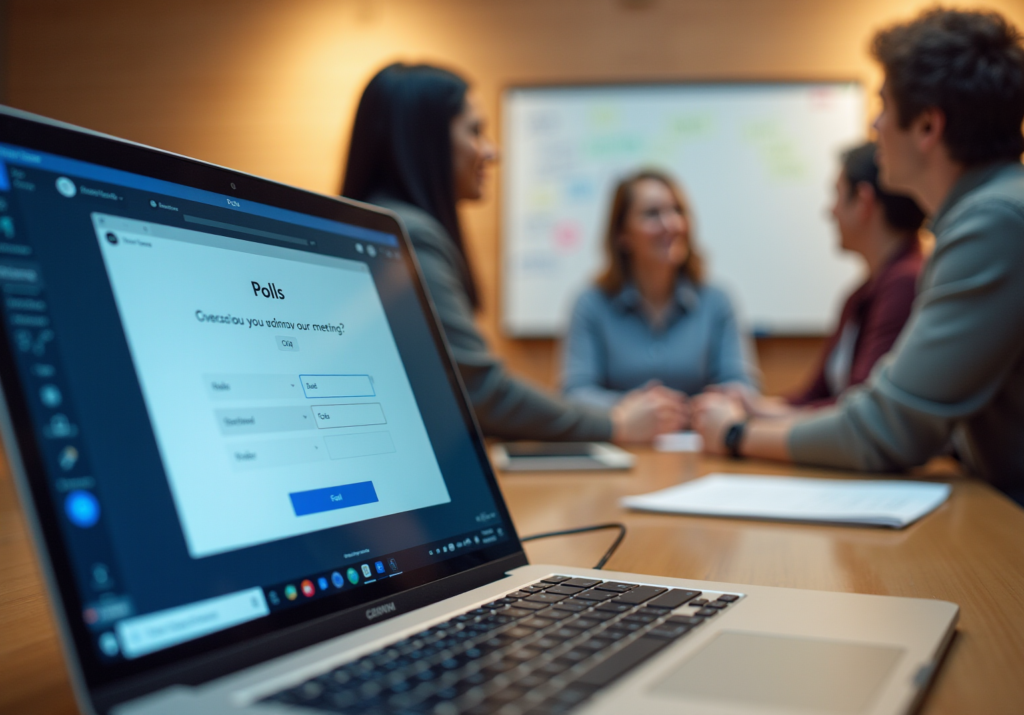
Creating effective polls for on Microsoft Teams is essential for during meetings. Start by selecting the ‘Polls’ app within your meeting interface. Clearly define your question and provide at least two answer options. Consider enabling a range of opinions. Ensure that your questions are straightforward and directly related to the meeting topics. For instance, when discussing a new policy, ask participants to vote on their level of support or concern.
Utilizing features such as can encourage honest feedback, fostering a more open dialogue. This approach not only increases participation through but also allows members to , ultimately leading to more informed decision-making. As George Jean Nathan wisely noted, “Bad officials are elected by good citizens who don’t vote,” underscoring the in any decision-making process.
Furthermore, with the upcoming availability of Teams events capabilities to all users licensed for Teams Enterprise starting April 1, 2026, to leverage these tools. By and audience interaction, they can ensure that every voice is heard and valued. This proactive approach will not only strengthen the union’s position but also empower members to engage actively in shaping their collective future.
Launch Polls Strategically During Meetings
To enhance engagement, initiating surveys at strategic moments during meetings is crucial. For example, introducing a survey right after discussing a controversial topic or a new suggestion allows participants to reflect on the discussion before participating in . Utilizing features like the ‘Launch’ option in Microsoft Teams can while the topic remains fresh in participants’ minds.
Furthermore, emphasizing the significance of can significantly . According to a Cvent and Harris Poll, , underscoring the need for . This approach not only increases turnout but also enhances the quality of feedback collected through , fostering a more inclusive decision-making process.
However, it is essential to refrain from initiating surveys during distractions or technical problems, as this can lead to reduced participation and engagement. By , union leadership can effectively and drive meaningful discussions.
Analyze and Utilize Poll Results for Improvement
Analyzing poll results is crucial after launching them. Utilize the available in Microsoft Teams to assess s related to and identify trends. Look for patterns in the data that reveal user preferences or concerns. For example, if a significant number of participants express dissatisfaction with a proposed policy, this feedback must be taken into account in .
Sharing the results with members fosters transparency and demonstrates that their opinions truly matter. This practice not only builds trust but also encourages in future polls. Remember the feedback cycle of inquiring, responding, and updating; by participating in , you .
Aim for a of 50% or higher to ensure that the is both representative and actionable. As Jack Wholey emphasizes, brief surveys are essential for , and providing feedback on measures implemented from survey findings strengthens participant trust and involvement.
In addition, keep an eye on the upcoming opening on January 19, 2026. This survey presents a valuable opportunity to gather insights into participant preferences and trends.
Ensure Compliance with Voting Regulations
To ensure adherence to , it’s essential to familiarize yourself with the laws governing collective elections and participant voting in teams, particularly those established by the Department of Labor. Compliance with the is critical; it mandates that unions conduct elections by at least every three years and notify participants at least 15 days in advance. Additionally, unions must retain records necessary to verify reports filed with the (OLMS) for a minimum of five years.
When creating polls, accessibility should be a top priority. Meeting is vital, as these guidelines ensure that , including those with disabilities. Organizations can enhance accessibility by implementing features like screen reader compatibility and keyboard navigation. Votem’s exemplify this commitment, successfully increasing access for all qualified voters, including military personnel and individuals with disabilities. Linda McCulloch noted this achievement as her greatest accomplishment in office.
Moreover, labor organizations must , adhering to their constitution and bylaws to uphold democratic practices. Votem has proven its effectiveness in managing large-scale voting, having processed 299,000 votes for the National Radio Hall of Fame, significantly boosting participation compared to previous years. The New Mexico State Republican Party expressed satisfaction with Votem’s software, indicating plans to utilize their services for future elections.
and participant responses is crucial. This practice not only provides an audit trail but also reinforces transparency in the electoral process. By prioritizing compliance and accessibility, organizations can uphold the integrity of their elections, foster greater participant confidence, and ultimately enhance involvement in the process of voting in teams. As stated by the , “The LMRDA establishes a bill of rights for union members; reporting requirements for unions, union officers, and union employees; standards for the election of union officers; and safeguards for protecting union funds and assets.
Conclusion
Creating an environment where every union member feels empowered to participate in decision-making is paramount. This commitment to inclusivity not only strengthens the union’s position but also fosters a culture of transparency and accountability. By implementing effective voting practices, organizations can significantly enhance engagement and ensure that diverse perspectives are heard and valued.
Key strategies include:
- The effective creation of polls in Microsoft Teams
- The importance of timing when launching surveys
- The necessity of analyzing results to inform future actions
Utilizing features like anonymous responses and analytics tools can lead to more meaningful insights and higher participation rates. Furthermore, ensuring compliance with voting regulations and prioritizing accessibility are crucial steps in maintaining the integrity of the voting process.
Ultimately, the significance of fostering active member engagement cannot be overstated. By embracing these practices, union leaders can cultivate a more vibrant and participatory environment where every voice contributes to shaping the collective future. Encouraging participation in voting not only empowers members but also reinforces the democratic principles that underpin union values. So, let’s take action and implement these strategies to create a stronger, more inclusive union.
Frequently Asked Questions
How do I create a poll in Microsoft Teams?
To create a poll in Microsoft Teams, select the ‘Polls’ app within your meeting interface, clearly define your question, and provide at least two answer options.
What should I consider when crafting poll questions?
Ensure your questions are straightforward, directly related to the meeting topics, and consider enabling multiple selections to capture a range of opinions.
Why is it beneficial to allow anonymous responses in polls?
Enabling anonymous responses can encourage honest feedback, fostering a more open dialogue and increasing participation in the voting process.
How can polls contribute to decision-making in meetings?
Polls allow team members to express their views freely, leading to more informed decision-making based on collective insights and opinions.
What is the significance of participation in decision-making, according to the article?
The article highlights that participation is critical in decision-making, as emphasized by George Jean Nathan’s quote about the role of voting in electing officials.
What upcoming feature will enhance Microsoft Teams for users licensed for Teams Enterprise?
Starting April 1, 2026, Teams events capabilities will be available to all users licensed for Teams Enterprise, enhancing meeting effectiveness and audience interaction.
How can union leaders benefit from using polls in Microsoft Teams?
Union leaders can leverage polls to enhance meeting effectiveness, ensure every voice is heard, and empower members to engage actively in shaping their collective future.
List of Sources
- Create Effective Polls in Microsoft Teams
- These Inspiring Quotes Will Get You Excited to Vote (https://countryliving.com/life/g24446791/voting-quotes)
- Create a Poll in Microsoft Teams: Step-by-Step Guide (https://tactiq.io/learn/create-a-poll-microsoft-teams)
- Microsoft Teams events: A new unified experience makes it easier to discover, create, and manage events | Microsoft Community Hub (https://techcommunity.microsoft.com/blog/microsoftteamsblog/microsoft-teams-events-a-new-unified-experience-makes-it-easier-to-discover-crea/4488299)
- freedomfoundation.com (https://freedomfoundation.com/labor/top-ten-union-quotes-from-right-to-work-hearing)
- Launch Polls Strategically During Meetings
- worklytics.co (https://worklytics.co/blog/top-12-metrics-for-effective-meetings)
- myhours.com (https://myhours.com/articles/meeting-statistics-2025)
- shutterfly.com (https://shutterfly.com/ideas/inspiring-quotes-about-voting-and-elections)
- archieapp.co (https://archieapp.co/blog/meeting-statistics)
- votem.com (https://votem.com/5-steps-to-create-a-quick-poll-for-union-engagement)
- Analyze and Utilize Poll Results for Improvement
- What is a good survey response rate for online customer surveys? (https://delighted.com/blog/average-survey-response-rate)
- The Evolving Landscape of Labor Organizing: Key Insights for Employers (https://narrativestrategies.com/newsroom/the-evolving-landscape-of-labor-organizing-key-insights-for-employers)
- Using surveys in your union branch to boost member engagement | Community Trade Union (https://community-tu.org/using-surveys-in-your-union-branch-to-boost-member-engagement)
- New Report Highlights What Employees Really Want in 2026 (https://aseonline.org/News-Events/ASE-News/EverythingPeople-This-Week/new-report-highlights-what-employees-really-want-in-2026)
- Half of employers bracing for rise in union activity following employment rights bill, survey finds (https://peoplemanagement.co.uk/article/1934422/half-employers-bracing-rise-union-activity-following-employment-rights-bill-survey-finds)
- Ensure Compliance with Voting Regulations
- New union election rules yield much quicker elections – McAfee & Taft (https://mcafeetaft.com/new-union-election-rules-yield-much-quicker-elections)
- REI Co-op, UFCW and RWDSU Issue Joint Statement on Results of Contract Vote (https://ufcw5.org/2026/02/rei-co-op-ufcw-and-rwdsu-issue-joint-statement-on-results-of-contract-vote)
- dol.gov (https://dol.gov/agencies/olms/compliance-assistance/publications/guide-for-new-union-officers)
- 2026 Voluntary Compliance Agreements (https://dol.gov/agencies/olms/foia/reading-room/election-decisions/voluntary-agreements-2026)
- reuters.com (https://reuters.com/legal/government/nlrb-poised-major-policy-shifts-2026-with-new-trump-appointed-majority-2026-01-05)