
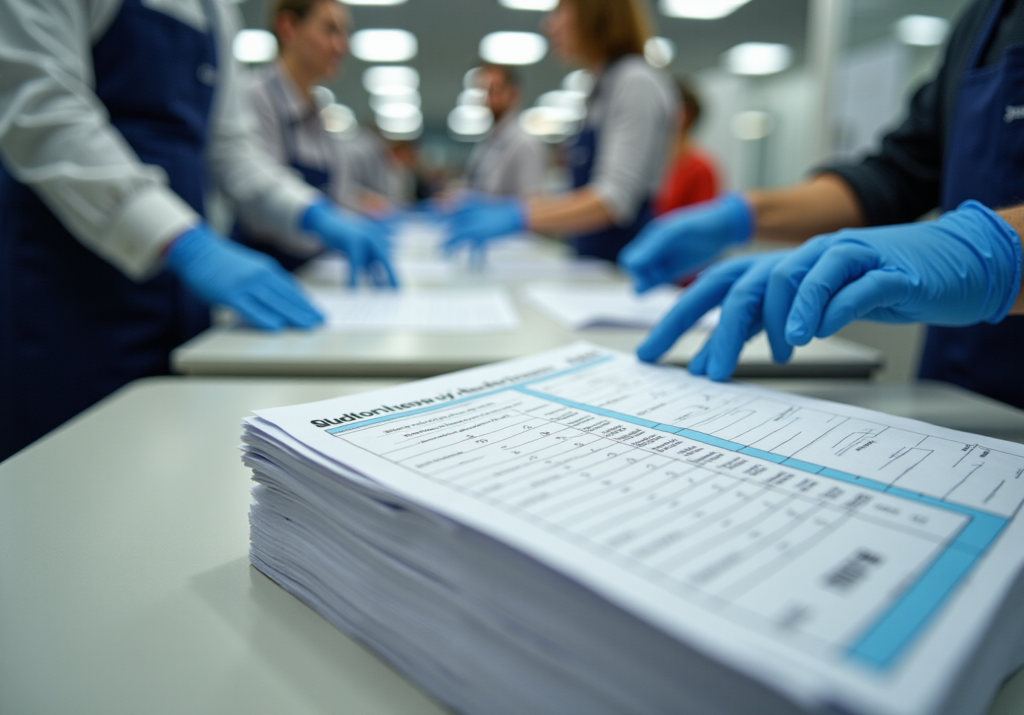
Key Highlights:
- Understanding the production and security of paper ballots is vital for election integrity and public trust.
- Ballots should be produced in secure facilities with controlled access and certified vendors to prevent tampering.
- High-quality materials, such as water-resistant paper, are crucial for durability and readability of ballots.
- Establishing a clear chain of custody with monitoring prevents unauthorised access to votes.
- Incorporating security features like watermarks and unique identifiers helps verify ballot authenticity.
- Regular testing and certification of voting processes ensure compliance with standards and identify vulnerabilities.
- Effective ballot instructions should use plain language, visual aids, and multilingual options to enhance voter comprehension.
- Conducting usability testing with diverse groups can refine ballot instructions for clarity and effectiveness.
- Ballots should be designed with clear layouts, legible fonts, and consistent formatting to minimise errors.
- Incorporating error prevention features and conducting pilot tests helps improve ballot design and voter experience.
Introduction
Understanding the complexities of paper voting ballots is crucial for safeguarding election integrity and building public trust. Millions of voters depend on these paper slips, and implementing effective practices can significantly enhance their reliability. From secure production methods to clear instructions and thoughtful design, every detail matters.
However, what common pitfalls could undermine this process? Identifying these challenges is essential to ensure that every vote counts. By addressing these issues head-on, we can foster a more trustworthy electoral system that meets the needs of all stakeholders involved.
Furthermore, it’s vital to consider how we can implement solutions that not only rectify these pitfalls but also strengthen the overall voting process. Engaging with union leadership to share insights and strategies will be key in this endeavor. Together, we can ensure that the integrity of our elections remains intact.
Understand the Production and Security of Paper Ballots
To ensure the integrity of elections, understanding the production and security measures surrounding paper voting slips is essential. This knowledge not only safeguards the electoral process but also fosters public trust in the outcomes. Here’s how we can enhance the security of paper ballots:
-
Secure Production: Ballots must be produced in secure facilities with controlled access to prevent tampering. It’s vital to utilize certified vendors who adhere to strict security protocols. Engaging bipartisan teams in the production process can further enhance integrity and transparency, ensuring that all stakeholders feel confident in the process.
-
Material Quality: The choice of paper and printing technology significantly influences the durability and readability of voting documents. High-quality, water-resistant paper can prevent damage during handling, ensuring that voting slips remain legible. With over 95% of U.S. voters submitting their votes on paper, the quality of these materials is crucial for precise vote counting.
-
Chain of Custody: Establishing a clear chain of custody for votes from production to distribution is crucial. Monitoring votes at every stage prevents unauthorized access. Implementing video surveillance during storage and processing acts as a strong deterrent against tampering and misconduct.
-
Security Features: Incorporating security features such as watermarks, barcodes, or unique identifiers helps verify the authenticity of voting materials and deters fraud. These features are essential in maintaining voter confidence, especially considering that around 98% of votes cast in the November presidential election were estimated to be on paper.
-
Testing and Certification: Regular examination of voting production processes and equipment ensures compliance with election standards and helps identify potential vulnerabilities. Awareness of common pitfalls, such as miscommunication or lack of training among personnel managing votes, is critical to maintaining security.
By adopting these methods, organizations can significantly improve the safety and dependability of their paper voting materials, promoting greater public trust and engagement. For instance, studies show that malfeasance related to mail balloting is extremely rare, with incidents less likely than being struck by lightning. This reinforces the effectiveness of these security measures and highlights the importance of vigilance in the electoral process.
Implement Effective Instructions for Completing Ballots
To ensure a seamless voting experience, it’s crucial to implement effective instructions for completing ballots. Here are key strategies that can make a significant difference:
-
Use Plain Language: Craft instructions in simple, straightforward language that everyone can easily understand. By avoiding jargon and technical terms, you minimize confusion and enhance comprehension.
-
Visual Aids: Incorporate diagrams or images to clarify the voting procedure. Visual aids help individuals understand how to mark their ballots accurately and where to submit them, thus reducing mistakes.
-
Multilingual Options: Offering guidance in various languages improves accessibility for those who do not speak English, ensuring full engagement in the electoral process.
-
Testing Instructions: Conduct usability testing with diverse groups to identify potential areas of confusion. Feedback from actual voters is invaluable for refining the clarity and effectiveness of the guidance provided.
-
Accessibility Considerations: Ensure that guidelines are accessible to individuals with disabilities. This may involve providing large print versions or audio guidance to accommodate various needs.
Focusing on these strategies can significantly enhance the likelihood that voters will complete their ballots correctly, ultimately increasing the overall accuracy of election outcomes. Studies indicate that communities with clear and accessible voting guidelines experience higher completion rates, underscoring the importance of effective communication in the electoral system.
Design Ballots with Clarity and Error Prevention in Mind
Efficient voting design is crucial for enabling a seamless election. To achieve this, consider the following best practices for designing ballots:
- Clear Layout: Arrange the voting document in a logical sequence that directs participants through the election process. Use headings and sections to separate different parts of the document, making it easier to navigate.
- Legible Fonts: Choose fonts that are easy to read, avoiding overly decorative styles. Ensure that font sizes are sufficiently large for everyone to read easily, as clarity directly influences completion rates.
- Consistent Formatting: Maintain consistent formatting throughout the document, including the use of colors, symbols, and spacing. This assists individuals in swiftly recognizing their options and decreases the chances of mistakes.
- Error Prevention Features: Incorporate features that help prevent common mistakes, such as clear instructions on how to mark the voting slip and reminders to check for completeness before submission. Research indicates that straightforward prompts can greatly diminish the amount of uncounted ballots; for instance, in East St. Louis, 10 percent of participants did not have their selection counted for U.S. Senate, compared to the state average of 4.4 percent.
- Pilot Testing: Conduct pilot tests of the design with real participants to identify potential issues and gather feedback. This iterative process can refine the design to better satisfy the needs of the electorate, ensuring that instructions are clear and accessible.
By prioritizing clarity and error prevention in the design of voting paper ballots, organizations can enhance the voting experience and ensure that every vote is accurately counted. This approach not only fosters public confidence but also contributes to higher turnout rates, as evidenced by successful implementations in various jurisdictions. Furthermore, it is essential to avoid terminology such as ‘over vote,’ ‘under vote,’ and ‘partisan’ to guarantee that guidance is understandable to all participants. Incorporating clear instructions and visual aids, as highlighted in the case study on ‘Voter Instruction Clarity,’ can further help voters understand how to correctly mark their ballots, reducing mistakes.
Conclusion
Understanding the best practices for using voting paper ballots is crucial for ensuring a fair and transparent electoral process. By focusing on the production, security, and design of paper ballots, organizations can foster public trust and enhance voter engagement. Implementing these strategies not only safeguards the integrity of elections but also empowers voters to participate confidently.
Essential practices include:
- Secure production methods
- Clear instructions for completing ballots
- Thoughtful design elements that prioritize clarity and error prevention
High-quality materials, effective communication strategies, and user-friendly ballot designs are key insights that jurisdictions must consider. By adopting these measures, the likelihood of errors can be significantly reduced, leading to more accurate election outcomes and increased voter satisfaction.
Ultimately, the effectiveness of the electoral process hinges on a commitment to improving how paper ballots are utilized. As communities strive for greater participation and transparency, embracing these best practices will pave the way for a more informed electorate and a robust democratic system. Engaging in ongoing discussions about these practices can further enhance public understanding and trust in the electoral process. Are we ready to ensure that every vote counts?
Frequently Asked Questions
Why is understanding the production and security of paper ballots important?
Understanding the production and security measures surrounding paper ballots is essential to ensure the integrity of elections and foster public trust in the outcomes.
What are secure production practices for paper ballots?
Ballots should be produced in secure facilities with controlled access to prevent tampering, utilizing certified vendors who follow strict security protocols, and involving bipartisan teams in the production process to enhance integrity and transparency.
How does material quality affect paper ballots?
The choice of paper and printing technology influences the durability and readability of voting documents. High-quality, water-resistant paper can prevent damage during handling, ensuring that voting slips remain legible.
What is the significance of the chain of custody for votes?
Establishing a clear chain of custody from production to distribution is crucial to prevent unauthorized access. Monitoring votes at every stage, including video surveillance during storage and processing, acts as a deterrent against tampering and misconduct.
What security features should be incorporated into paper ballots?
Security features such as watermarks, barcodes, or unique identifiers help verify the authenticity of voting materials and deter fraud, which is essential for maintaining voter confidence.
Why is testing and certification important in the voting process?
Regular examination of voting production processes and equipment ensures compliance with election standards and helps identify potential vulnerabilities, thereby maintaining security.
How rare is malfeasance related to mail balloting?
Studies show that malfeasance related to mail balloting is extremely rare, with incidents being less likely than being struck by lightning, reinforcing the effectiveness of security measures in the electoral process.
List of Sources
- Understand the Production and Security of Paper Ballots
- Ensuring Election Readiness with Secure Ballot Printing Solutions – Microcom Corporation (https://microcomcorp.com/2025/09/15/ensuring-election-readiness-with-secure-ballot-printing-solutions)
- Trump wants to ‘go back to paper ballots.’ That’s how most voting happens already. (https://votebeat.org/2025/03/17/trump-lindell-paper-ballots-election-security-myth)
- Mail Ballot Security Features: A Primer (https://brennancenter.org/our-work/research-reports/mail-ballot-security-features-primer)
- Some Good News for Donald Trump: We Already Use Paper Ballots (https://brennancenter.org/our-work/analysis-opinion/some-good-news-donald-trump-we-already-use-paper-ballots)
- Push grows to mandate paper ballots as N.Y. counties eye touch-screen voting (https://spectrumlocalnews.com/nys/central-ny/politics/2024/05/24/push-grows-to-mandate-paper-ballots-as-n-y–counties-eye-touch-screen-voting)
- Implement Effective Instructions for Completing Ballots
- The importance of accurate information in elections (https://poderlatinx.org/blog/the-importance-of-accurate-information-in-elections)
- Explaining ballot questions in plain language | Center for civic design (https://civicdesign.org/reports/explaining-ballot-questions-in-plain-language)
- Ballot measures need to be written in plain language (https://thefulcrum.us/electoral-reforms/plain-language-for-ballot-measures)
- Ballot measures: How wording, ballot format and news coverage affect voters (https://journalistsresource.org/politics-and-government/ballot-measures-election-research)
- Design Ballots with Clarity and Error Prevention in Mind
- Why Bad Ballot Design Is a Really Significant Problem (https://psmag.com/news/why-bad-ballot-design-is-a-really-significant-problem)
- How to Design Better Ballots (https://brennancenter.org/our-work/research-reports/how-design-better-ballots)
- EC Revamps EVM Ballot Paper Design for Better Clarity and Readability | DD News On Air (https://newsonair.gov.in/election-commission-revamps-evm-ballot-paper-design-for-better-clarity-and-readability)